The difference between cleaning facades and windows with demineralised water and mechanical cleaning: What to choose?
Façade and window cleaning is a key element of building maintenance, which affects not only the aesthetics but also the durability of the surface. Choosing the right cleaning method is extremely important, so it is worth knowing the differences between two popular techniques – cleaning with demineralised water and mechanical cleaning. In this post, we will present what both methods involve, their advantages, in which situations they are worth using and what their main differences are.
Demineralised water cleaning – what is it and how does it work?
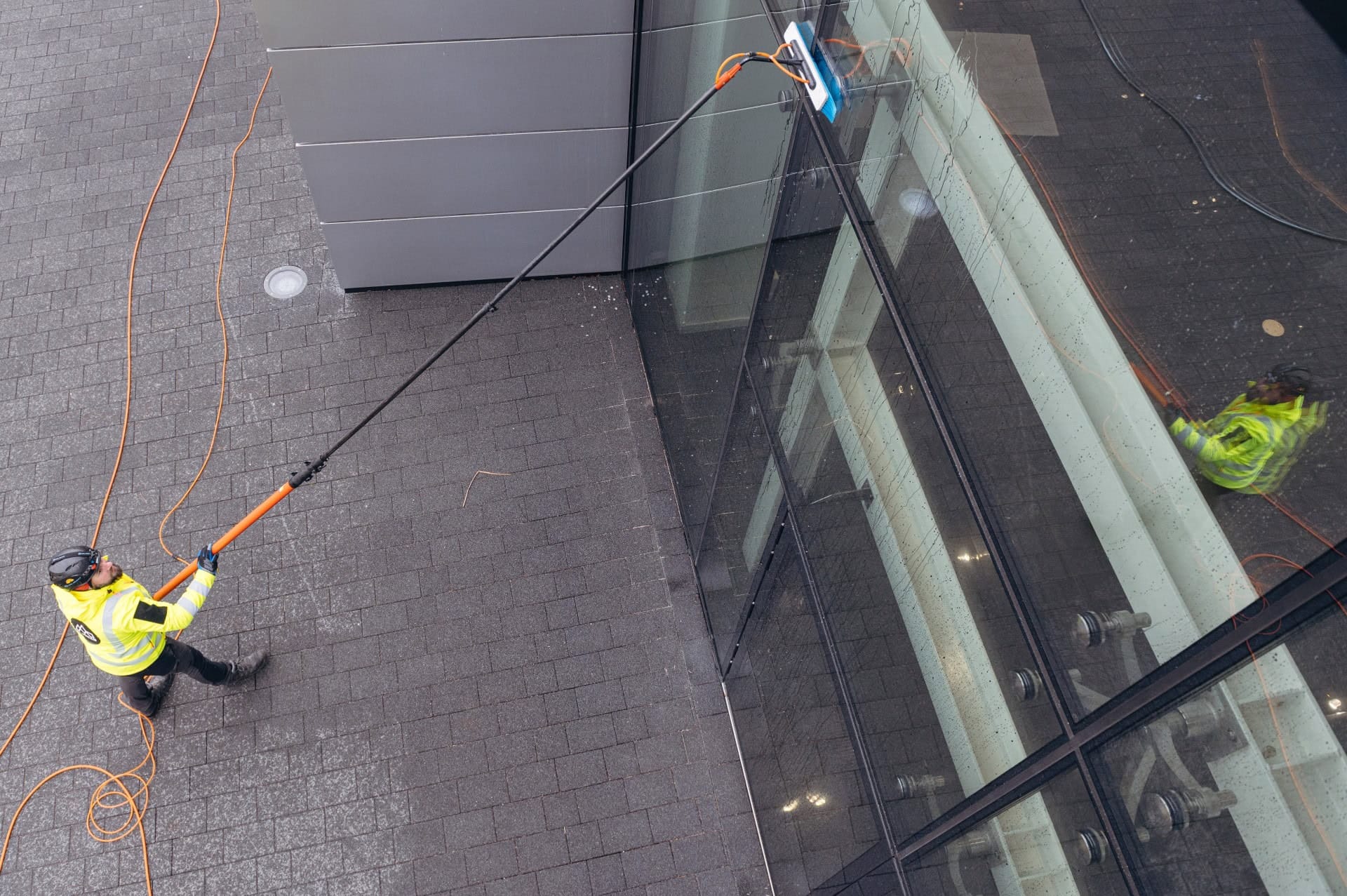
Demineralised water cleaning, also known as deionised or demineralised water cleaning, is a method that is gaining popularity among facade and window cleaning companies. Demineralised water is water from which all minerals, such as calcium, magnesium and sodium, have been removed, making it „pure” and leaving no streaks or deposits upon drying.
How does this method work?
When washing with demineralised water, the surface being cleaned (e.g. windows, facade) is dampened with water and then rinsed, which effectively removes dirt. Demineralised water has the advantage of not leaving marks on surfaces because it does not contain minerals that could settle and form stains or streaks.
Advantages of washing with demineralised water:
- No streaks or residue – Demineralised water contains no minerals that would leave stains on facades or windows. As a result, the cleaning effect is long-lasting and streak-free.
- Surface safe – Washing with demineralised water does not scratch the surface, which is why it is ideal for cleaning delicate materials such as glass or surfaces with a delicate structure.
- Environmental friendliness – Demineralised water is chemically neutral, meaning that aggressive detergents are not used in it, which is beneficial for both the environment and health.
- Effectiveness in the fight against dust and dirt This type of water perfectly binds and removes dirt particles, effectively cleaning surfaces of atmospheric pollutants, smog and soot.
- No risk of damage – Demineralised water is non-corrosive, so it is safe for use on various building and finishing materials without causing them to degrade.
Mechanical car wash – what are its characteristics?
Mechanical cleaning involves the use of equipment such as brushes, rotary machines, industrial vacuum cleaners, as well as high-pressure washers to remove dirt from surfaces. It is a more advanced method that can include both dry cleaning and cleaning using high-pressure water.
How does this method work?
During mechanical cleaning, dirt is removed thanks to the physical pressure of cleaning tools, which can include both dry cleaning and the use of chemical agents. Cleaning using high-pressure machines is particularly effective in removing deeply ingrained dirt, such as mould, stains, petroleum-based contaminants, or difficult-to-remove deposits.
Advantages of mechanical washing:
- Efficacy in removing stubborn stains – Mechanical washing is excellent at removing dirt that requires greater force to be removed. It deals brilliantly with deposits, mould or stubborn stains that do not disappear with water cleaning alone.
- Speed – Mechanical cleaning, especially using high-pressure machines, is quick and effective. The ability to work on large surfaces directly speeds up the entire cleaning process, which can be important in the case of large building facades or roofs.
- Versatility – Mechanical washing can be carried out on various types of surfaces, including hard materials such as concrete, stone, brick, sheet metal or glass. In the case of dirt that is difficult to remove, this technique works exceptionally well.
- Efficacy in the fight against grease and chemicals – Mechanical washing may also include the use of detergents, which are effective in removing grease, lubricants, or other stubborn chemical contaminants.
- Versatility – Besides facade and window cleaning, this method is widely used for cleaning industrial surfaces, warehouses, roads, pavements, as well as for cleaning roofs and other high-level elements.
What are the differences between these methods?
- Scope of application Demineralised water cleaning is suitable mainly for surfaces that require gentle cleaning, such as glass or smooth facades, whereas mechanical cleaning is ideal for more demanding surfaces with stubborn grime.
- Cleaning power – Demineralised water effectively removes atmospheric pollutants and streaks, but in the case of heavier grime (e.g. mould, moss, grease), cleaning with demineralised water may be less effective. Conversely, mechanical cleaning, especially using high-pressure equipment, is more effective in tackling stubborn dirt.
- Surface protection – Washing with demineralised water is gentler on surfaces and does not cause scratching or damage. Mechanical washing, on the other hand, particularly using rotary or high-pressure tools, can lead to micro-damage if not carried out carefully.
- Time and efficiency – Mechanical washing is quicker, especially on large surfaces, whereas washing with demineralised water, although very effective, can be more time-consuming over larger areas.
- Ecology – Demineralised water is more environmentally friendly as it does not require the use of aggressive chemicals, whereas mechanical cleaning often involves the necessity of using detergents that may contain chemical substances.
Which method should I choose?
The decision on choosing the appropriate method for cleaning facades and windows depends on many factors, including the type of surface, the degree of soiling and the expected results. If you care about gentle, ecological cleaning without leaving streaks, cleaning with demineralised water will be the ideal solution. In turn, in the case of heavily soiled surfaces on which difficult-to-remove contaminants have settled, mechanical cleaning, especially using high-pressure equipment, will be more effective.
Summary
Both methods – cleaning with demineralised water and mechanical cleaning – have their advantages and are used in various situations. The choice of the appropriate method depends on the type of surface being cleaned, the degree of soiling and the expected result. It is important to commission such work to professional companies that have the appropriate equipment and experience to ensure the highest quality of service.